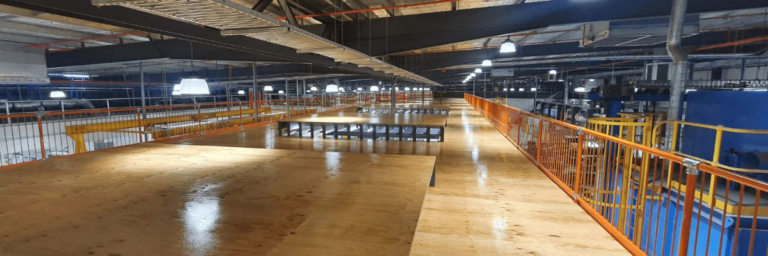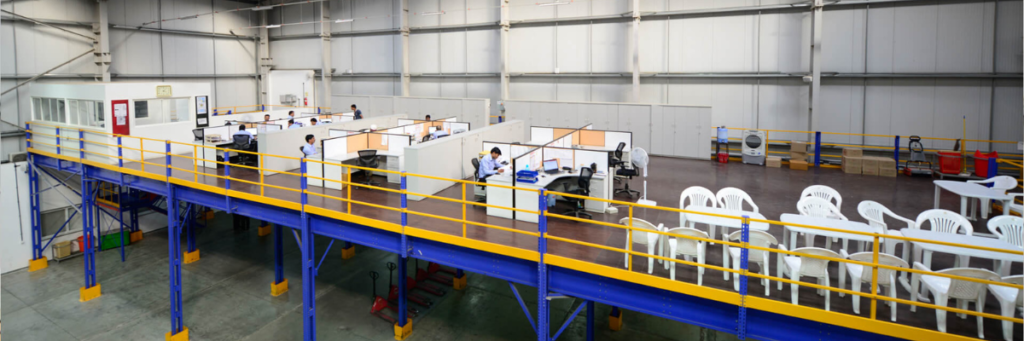
Mezzanine floors have become a popular solution for industries that need to maximize their space utilization without the high costs and downtime associated with traditional construction. These intermediate floors are versatile, durable, and cost-effective, making them ideal for various sectors. Here are the top industries leveraging mezzanine floors to optimize their operations.
1. Warehousing and Logistics
- Applications:
- Storage for inventory and equipment.
- Additional space for packaging and dispatching.
- Separation of work zones, such as loading docks and picking areas.
- Benefits:
- Increases storage capacity without expanding the warehouse footprint.
- Reduces operational inefficiencies by creating organized zones.
- Quick installation minimizes disruption to logistics operations.
2. Manufacturing and Industrial
- Applications:
- Creation of assembly lines, maintenance areas, or storage zones.
- Housing for heavy machinery or tools.
- Administrative offices within production facilities.
- Benefits:
- Segregates workstations and storage for streamlined operations.
- Durable mezzanine floors can handle heavy loads and industrial vibrations.
- Helps meet safety and compliance standards by organizing workspaces.
3. Retail and Commercial
- Applications:
- Additional display areas for products.
- Creation of customer lounges, trial rooms, or checkout counters.
- Storage of inventory in backrooms.
- Benefits:
- Enhances customer experience by improving layout and accessibility.
- Increases floor space for showcasing more products.
- Offers aesthetic designs that align with the store’s branding.
4. Offices and Corporate Spaces
- Applications:
- Additional workspaces, meeting rooms, or break areas.
- Archives or storage for files and office supplies.
- Employee lounges or cafeterias.
- Benefits:
- Allows expansion within the existing office space.
- Improves workflow by segregating teams or departments.
- Modular designs enable future reconfiguration based on needs.
5. E-Commerce and Fulfillment Centers
- Applications:
- High-density storage for inventory.
- Dedicated zones for order picking and packing.
- Sorting and dispatching areas.
- Benefits:
- Handles seasonal demand by offering scalable storage solutions.
- Optimizes workflows for faster order processing.
- Reduces costs associated with renting additional space.
6. Automotive Industry
- Applications:
- Storage of spare parts, tires, and tools in service centers.
- Creation of workspaces for technicians.
- Housing heavy equipment like lifts or diagnostic machines.
- Benefits:
- Organizes parts and tools for efficient servicing.
- Provides space for administrative tasks within garages or workshops.
- Supports the weight of heavy automotive components.
7. Food and Beverage
- Applications:
- Storage of raw materials, packaging, and finished goods.
- Creation of quality control or inspection zones.
- Additional space for refrigeration units.
- Benefits:
- Ensures proper segregation of food products for hygiene compliance.
- Increases storage capacity in food processing plants or warehouses.
- Cost-effective solution for growing businesses.
8. Hospitality and Entertainment
- Applications:
- Additional seating or VIP areas in restaurants, cafes, and bars.
- Lounge areas or private boxes in theaters or event venues.
- Storage for equipment or supplies.
- Benefits:
- Enhances customer experience with unique seating arrangements.
- Maximizes revenue by increasing usable space.
- Aesthetic mezzanine designs complement the venue's decor.
9. Healthcare and Pharmaceuticals
- Applications:
- Storage of medical supplies and equipment.
- Creation of laboratory or administrative spaces.
- Segregation of sterile and non-sterile zones.
- Benefits:
- Organizes critical medical inventory for easy access.
- Provides extra space for laboratories and research activities.
- Ensures compliance with healthcare regulations.
10. Education and Libraries
- Applications:
- Additional study areas, reading rooms, or classrooms.
- Storage of books, archives, and resources.
- Faculty lounges or administrative offices.
- Benefits:
- Optimizes space in schools, universities, and public libraries.
- Provides functional and visually appealing study zones.
- Helps accommodate growing student populations.
11. Aerospace and Defense
- Applications:
- Storage of tools, parts, and equipment for maintenance facilities.
- Workspaces for technicians and engineers.
- Housing for large components like engines or landing gear.
- Benefits:
- Handles high loads with durable designs.
- Ensures organized operations in highly technical environments.
- Facilitates compliance with stringent safety standards.
12. Residential and Urban Spaces
- Applications:
- Loft-style living spaces in apartments with high ceilings.
- Additional storage or study areas in homes.
- Creative solutions for compact urban living.
- Benefits:
- Increases usable space in small or compact homes.
- Provides modern, aesthetic living solutions.
- Quick installation minimizes disruption to daily life.
Key Advantages of Mezzanine Floors for Industries
- Cost-Effective Expansion: Adds usable space without the need for new construction or relocation.
- Quick Installation: Prefabricated components ensure minimal downtime.
- Versatility: Customizable designs cater to the unique needs of each industry.
- Durability: Engineered to handle industry-specific loads and requirements.
- Scalability: Easily expanded, modified, or relocated to accommodate business growth.
Frequently asked questions
Do I need approvals for a mezzanine?
Requirements vary by building and use. We provide drawings and structural details that your consultant or building owner can use for any approvals needed.
What is a mezzanine floor?
A mezzanine is an intermediate steel floor built inside a tall building to add usable area for storage, offices or production without extending the building.
How much load can a mezzanine carry?
Each mezzanine is designed for its use u2014 light storage, heavy racking or offices u2014 and the design load is confirmed in the drawings and quotation.